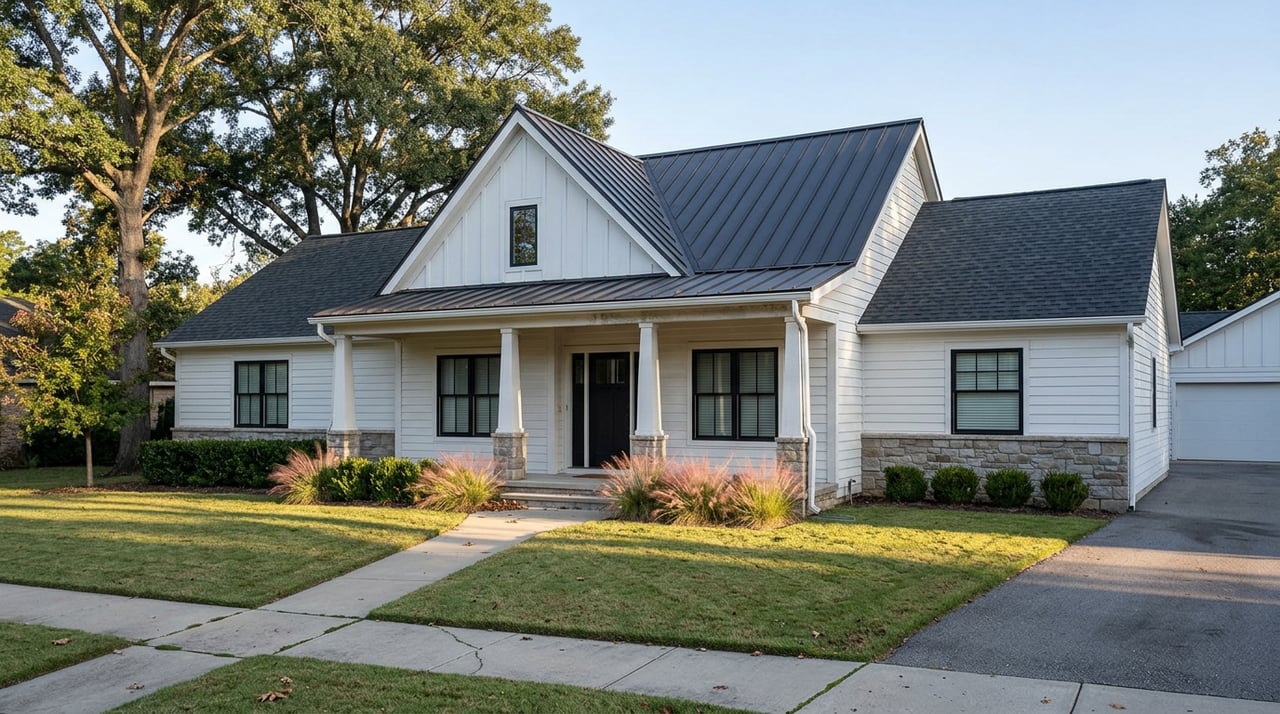
Picture a seller in an established Yukon neighborhood, maybe off Frisco Road or somewhere near Rambling Acres, pulling up a builder's new listing three miles away to figure out where to price their own home. The builder's sign says $299,900. So the seller sets their comparable resale home at $289,900, figuring a few thousand under new construction should move it fast.
Here's the problem. Almost nobody buying that new-construction home is actually paying $299,900 in real terms. The builder is quietly knocking thousands off the effective cost through a rate buydown or a closing-cost credit that never shows up on the sign or the listing sheet. The sticker price stayed put so the builder's next phase doesn't look discounted. But the buyer's monthly payment, and the amount they're really willing to spend, moved.
That gap between what a new-construction listing says and what a buyer actually pays is the real story in Yukon right now, and it's the piece most sellers miss when they price against a builder down the street.
The List Price Isn't the Price Anyone's Paying
Builders working in the Oklahoma City metro, including in Yukon, have leaned hard on financing incentives rather than price cuts. That distinction matters more than it sounds like it should.
A price cut lowers the number every future buyer compares against, and it can drag down the builder's whole community. An incentive buried in the financing does the same thing for the buyer's wallet without touching the community's comps. Builders protect their pricing structure. Buyers still get a better deal. Everyone except the resale seller down the street walks away thinking the math is simpler than it is.
The incentives generally fall into a few categories, and they're not interchangeable:
- Temporary rate buydowns. A structure like a 2-1 buydown cuts the interest rate by two percentage points in year one, one point in year two, then the rate returns to normal in year three. The builder or its preferred lender covers the difference at closing.
- Permanent rate buydowns. The builder pays discount points upfront to lower the rate for the life of the loan, not just the first couple of years. For a buyer planning to stay put, this is usually worth more than a temporary buydown.
- Closing cost credits. Cash toward the buyer's costs at the table, often contingent on using the builder's in-house lender.
- Design center upgrade credits. Money toward finishes rather than the loan itself, which helps the home but doesn't touch the monthly payment.
None of these show up in the headline list price. All of them show up in what a buyer will actually spend to live there. When a resale seller compares only the sticker prices, they're comparing a number that includes hidden discounts against a number that doesn't.
Why the Portals Can't Agree on Yukon Either
If you've pulled up more than one home value site for Yukon this year, you've probably noticed the numbers don't line up. Redfin has put the recent median sale price for Yukon in the low $230,000s over a trailing three-month window. Zillow's typical home value for the city sits in the mid-$270,000s. Realtor.com's median listing price has run closer to $310,000.
Three sites, three numbers, and none of them are wrong. They're measuring different mixes of the same market. Zillow's estimate leans on the full pool of homes, older and newer together. Realtor.com's figure skews toward active listings, and new construction makes up a larger and larger share of what's actively listed in Yukon right now. New-construction inventory in the city has climbed into the hundreds of active listings, with new-build median list prices running close to $310,000, well above what a lot of existing homes in town are actually selling for.
So when a portal's median looks high, it's often not telling you resale values went up. It's telling you new construction now makes up more of what's for sale, and new construction lists higher even when the effective, after-incentive price is lower than the sign suggests.
The Growth Isn't Spread Evenly Across Yukon
Not every Yukon seller is dealing with this in the same way, because the new construction isn't dropping evenly across the city.
The heaviest building activity is tracking specific corridors: Yukon Parkway, Frisco Road, and the stretch of the west side tied to Garth Brooks Boulevard. The city's own project and plat records point to phased developments like Frisco Ridge, Legacy Lakes, Stone Mill, Yukon Crossing, and The Commons clustering along these same access routes. Builders including D.R. Horton, Lennar, Homes by Taber, LGI Homes, and Rausch-Coleman have communities in this same footprint, from Redstone Ranch and Tuscany Lakes to Horn Valley and Britton Farms.
That clustering isn't an accident. It's following the infrastructure. The city ran a major overlay project on Garth Brooks Boulevard starting in July 2025, resurfacing the road, adding turn lanes, and updating signals and sidewalks along the stretch between Andrew Drive and Health Center Parkway, funded on an 80-20 split between the Oklahoma Department of Transportation and Yukon's Capital Improvement Fund. On the original 315-day schedule, that work was slated to wrap by early summer 2026. Around the same time, Canadian County put a separate $4.4 million project into repaving Frisco Road, which served as the detour route while Garth Brooks was down to one lane. Public money went into the corridors first. New rooftops followed.
Meanwhile, some of Yukon's older, lower-priced pockets, places like Rambling Acres, Northridge, Northaven, Briarcreek, and Rollingwood, sit outside that immediate growth pattern. A resale home in one of those neighborhoods isn't facing the same head-to-head new-construction comparison that a home closer to Yukon Parkway or the Garth Brooks corridor is.
If you're selling near the growth corridors, you're competing with builder financing. If you're selling in an older, established section of town, you're mostly still competing with other resale homes. Those are two different pricing conversations, and treating them as one is where sellers get it wrong.
What This Means If You're Selling an Older Home in Yukon Right Now
The metro-wide backdrop gives sellers a bit less room for error than a year or two ago. Oklahoma City home prices dipped year over year into the mid-$300,000s this summer, inventory has been climbing, and a meaningful share of active listings have taken a price cut. Yukon itself has stayed on the seller-favored side of that shift, with recent monthly reports showing roughly four months of inventory and sellers still averaging close to full asking price, but the room for a lazy price is smaller than it was.
That makes the resale-versus-new-construction math worth doing correctly rather than roughly. A few things to work through before you set a number:
Price against total cost, not sticker price. Ask what a buyer would actually pay per month for the new-construction alternative after a typical buydown, not what the sign says. If you can't get that number, ask your agent to pull it from a lender who's worked recent new-construction closings in your part of town.
Lean into what a subdivision under construction can't offer yet. Mature trees, established streets, a lot that isn't hemmed in by a construction fence, a neighborhood that already has its sidewalks finished. These are real advantages in a market full of homes still going up.
Know which comparison you're actually in. A home near the Garth Brooks or Yukon Parkway corridor is being cross-shopped against builder inventory in a way that a home in Rollingwood or Lakeview generally isn't. Price and market the two situations differently.
FAQ
Should I offer my own rate buydown as a resale seller? It depends on your buyer pool and your bottom line, but it's worth running the numbers before ruling it out. A seller-funded temporary buydown can close the gap with a nearby new-construction deal without cutting your list price, and it keeps your home's sale price intact for future comps in your own neighborhood.
How do I find out what a builder's real effective price is on a comparable home nearby? Ask a lender who has closed recent new-construction loans in that specific community what buydown or credit structure was in place at the time. Builder incentives change month to month, so a number from even a few months ago may not hold.
Does the Garth Brooks Boulevard construction affect nearby home values? Road construction itself is usually a short-term inconvenience rather than a value driver, but the finished infrastructure it leaves behind, wider lanes, updated signals, better sidewalks, tends to be part of what makes a corridor attractive to builders in the first place. It's a signal of where growth is heading, not a guarantee of it.
Is Yukon still a seller's market in late 2026? Recent monthly data has shown Yukon holding in seller-favored territory, generally in the range of four months of inventory, with homes still selling close to full asking price. That said, inventory has been loosening compared to prior years, so pricing accuracy matters more than it used to.
If you're trying to figure out where your home actually sits in this market, whether that's an older street in Rollingwood or a resale home a half mile from a builder's newest phase, AIM Real Estate can walk through the real numbers with you, not just the sticker price. Contact us when you're ready to talk through your options.